

Alumni Talks

James Goodman
Director of Tabletop R&D
>> What Has Game AI Ever Done for the Romans?
Abstract: How much would the ancient Romans have benefited from an understanding of Monte Carlo Tree Search? How well can computer scientists collaborate with classical archaeologists? Come and find out.
Bio: James Goodman graduated with a PhD from iGGi in 2025 with work on using statistical planning algorithms in modern tabletop board games. He has since completed a short Postdoc in the Department of Classics at Reading University, whence comes the inspiration for his talk. He is a Director of Tabletop R&D, a Queen Mary spinout company, and a core contributor to the open source Tabletop Games Framework (www.tabletopgames.ai).

Jozef Kulik
Senior Research & Accessibility Lead @ PlaytestCloud
>> A Bird's Eye View: How Remote User Research Affects Hundreds of Games
Abstract: Every year thousands of playtest run across games at every stage of development. From concept sketches and greybox prototypes, to vertical slices and launch ready games. That volume underlies a perspective that very few people get to see, which questions are concerning teams, when and how are they asking them, and what tends to change before the consumer sees the game.
This talk walks through the stages of game development and the types of research that influence the process at each stage. We'll look at how different research methods are used, what they're good for, what teams sometimes get wrong and how research outcomes often ripple out into design, marketing and commercial outcomes for studios.
You'll leave with a more practical understanding of games user research and how its affecting the games industry today.
Bio: Joe Kulik is a games user researcher with over a decade of industry experience and a specialism in game accessibility, a subject in which he holds a PhD. As Senior Research and Accessibility Lead at PlaytestCloud, he works with hundreds of studios to shape their research strategy and craft, helping them use player data to de-risk their games. He is a regular speaker and contributor to the games accessibility community.

Cristina Dobre
Applied Scientist Researcher @ University of Augsburg
>> What’s Happening with the VR Games: The Impact of Social Nonverbal Cues and Embodiment on VR Entertainment
Abstract: Virtual reality entertainment, especially in the games industry, shows how creativity and innovation opens new avenues for how players experience gaming. However, there's not only creativity at play here. User's presence, place and plausibility illusions, and their embodiment are core decisive elements for VR entertainment. How can these impact and improve the gaming experience? How can nonverbal behaviours, oftentimes dismissed or little taken into account, impact how VR is experienced? This talk will discuss these open questions, will highlight the current gaps in this field and some ways for moving forward.
Bio: Cristina Dobre is a technical multimodal VR and ML researcher with a focus on social interactions in virtual environments. She is interested in the nonverbal cues that influence and shape free-flow social interactions in immersive XR. Currently, she is researching group engagement in VR classrooms, focusing on eye-tracking data. She received her IGGI PhD from Goldsmiths, University of London, based on an interdisciplinary work focusing on the underlying mechanics of VR/AR social interactions that help develop and model empathic and engaging virtual humans. She collaborated with multiple academic and industry partners, such as UCL, Microsoft Research, Dream Reality Interaction and Maze Theory game studios.
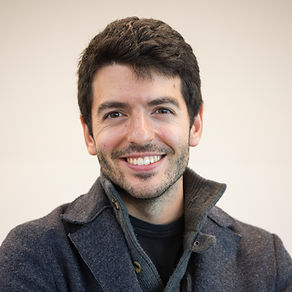
Carlos González Díaz
Postdoctoral Researcher @ University of Augsburg
>> Eye-tracking in Social VR and What to Take Away for Game Technology
Abstract: In this talk I will (1) present a summary of my postdoc research after IGGI, and (2) reflect on the implications of group behaviour in VR games. The first part of the talk will summarise findings from three studies investigating eye-tracking data and machine learning approaches for groups in Social VR. The second part will relate these findings to VR gaming. Come to this talk if you want to be surprised about how we behave with others in VR and make the most of it for your game.
Bio: Carlos González Díaz is a Postdoctoral Researcher at the University of Augsburg researching on multimodal VR data and lecturing games programming in the beautiful Bavaria, Germany. He holds a PhD from the iGGi programme (York) on interactive machine learning for VR controls and an MSc in Serious Games from Skövde, the Swedish city that gave birth to Goat Simulator! His interests are diverse, from technical problems such as supervised and reinforcement learning in games, to human behaviour in VR and motion-controlled games. In short, giving a twist to technology from a human lens. He is also very social, come say hi to him if you spot him!

Nick Ballou
Research Fellow @ Imperial College
>> Open Play: Findings and Lessons from 2 Million Hours of Public Video Games Data
Abstract: Open Play is a public dataset of high-resolution video game play data spanning 5 platforms and >35k repeated surveys assessments of sleep, wellbeing, and attention, sourced from 2k US and UK 18–40 year olds.
I'll describe the dataset’s structure and analytical affordances, with practical guidance on how researchers can use it to study tech behavior. I'll then present findings suggesting that late-night gaming is weakly with sleep outcomes, and that reported wellbeing experiences both in and outside games do not relate to subsequent play behaviour—patterns that run counter to prevailing theoretical accounts.
Finally, I’ll reflect on lessons learned from collaborating with games industry partners on contentious research topics, and developing open source data collection methods in parallel.
Bio: Nick Ballou is a fellow at Imperial College London who is professionally concerned with when/how video games are good vs bad for you (tldr: it's complicated), and personally concerned with his backend volleys on the padel court. His current project uses behavioral trace data, causal inference, and intensive longitudinal surveys to support healthy adolescent gaming habits.
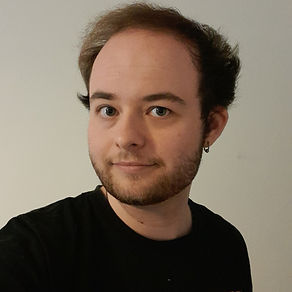
Nathan Hughes
Research Associate @ University of York
>> The Quality of Safety is... Games? An Alumn's Journey from Games Research to Safety Science
Abstract: In 1967, Prof. David Hazen once said, "if we knew what it was we would learn, it just wouldn’t be research, would it?" This is certainly true of games research, and the many places it can take you. In this talk, I overview my journey from open world games to my current research on human-AI teaming in safety-critical contexts. Despite the seemingly vast differences between these fields, I have found my time in games has given me key skills to understand this new and increasingly important field. Attendees can expect to learn about the similarities between games and safety, the theories and philosophies of research gained that were most insightful, and the overlaps in methodological techniques that can be applied to both. The talk concludes with a simple takeaway: if we knew where our research would take us, it just wouldn't be fun, would it?
Bio: Nathan Hughes is a Research Associate at the Centre for Assuring Autonomy (CfAA) at the University of York, researching the safety of human-AI teaming. They have a keen interest in how people use and experience technology, and have worked in several domains including healthcare, air traffic management, and video games. This cross-disciplinary experience has been driven by an ongoing fascination with human decision-making, and the ways in which the systems we build either help or hinder it.

Joseph Walton-Rivers
Lecturer @ Falmouth University
>> AI for Board Games
Abstract: This talk will provide an overview of current interesting areas for board and digital games research for computational intelligence. It will explore some possible avenues and motivations for future work in this space.
Bio: Joseph Walton-Rivers is an AI researcher based at Falmouth University. He has run the Hanabi competition at CoG, and was in the first iGGi cohort based at the University of Essex.
Organisers:
-
General Chairs: Laurissa Tokarchuk, Jeremy Gow
-
Programme Chair: Filip Sroka, Toby Best, Ruizhe "Jay" Yu Xia
-
Outreach & Marketing Chair: Prakriti Nayak
-
Poster & Workshop Chair: Dien Nguyen
-
Local Chair: Karl Clarke
-
Tech/Media Chairs: Karl Clarke, Prakriti Nayak
-
Alumni Chair: Nicole Levermore
-
General Management: Susanne Binder, David Hull
-
Admin Support: Shopna Begum, Helen Tilbrook, Oliver Roughton
-
Website/Industry Liaison: Susanne Binder